Understanding Crucial Mistakes To Avoid When Using A Blank Unit Circle
Let's dive into the details surrounding Crucial Mistakes To Avoid When Using A Blank Unit Circle. One of the most common uses of the blank unit circle is to visualize the relationships between sine, cosine, and tangent. By placing the angle of interest at the top (π/2 radians or 90 degrees), the unit circle makes it easy to see how sine, cosine, and tangent relate to one another – and how their graphs look like in the polar coordinate system. To take this visualization a step further, students can imagine the tangent line intersecting the x-axis at a specific point, revealing its value as the reciprocal of.
Key Takeaways about Crucial Mistakes To Avoid When Using A Blank Unit Circle
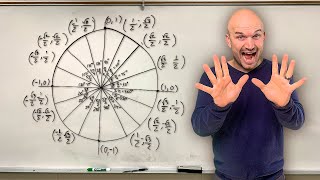
- Simple, easy to understand math videos aimed at High School students. Want more videos? I've mapped hundreds of my videos ...
- This video demonstrates how to find coordinates on a
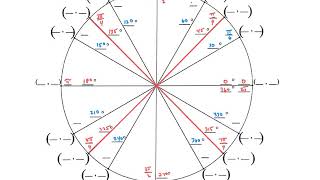
- In this video we will explore exactly what you need to know as well as my 5 step process for
- This is the thing that has kept you up at night all week! That darn
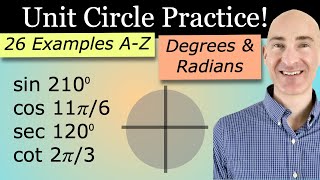
- Algebra 2: reference angles can feel easy… until the angle lands in the “wrong” quadrant and everything starts going sideways.
Detailed Analysis of Crucial Mistakes To Avoid When Using A Blank Unit Circle
Suddenly, students might attempt to "borrow" concepts from the blank unit circle and apply them directly to calculus – only to find that the rules don't quite carry over. When using the unit circle with derivatives or integrals, students often mistakenly assume the rules of trigonometric identities will hold. For example, they might believe that ∫[0, π] sin(x) dx equals some simple formula based on the unit circle. However, in calculus, we use the fundamental theorem of calculus and the chain rule to evaluate these. A crucial mistake that arises when using the unit circle is neglecting the impact of coordinate systems. Different coordinate systems can dramatically change the appearance of functions and angles, making it crucial to choose the right system for a given problem. When dealing with trigonometry, it's essential to recognize that some problems require Cartesian coordinates, while others demand polar or parametric representations. By failing to distinguish between these systems, students might end up with muddled or. The blank unit circle is a powerful tool for exploring trigonometric concepts and preparing students for calculus. However, careless handling or misapplication can lead to serious misconceptions and muddled understanding. By heeding these crucial mistakes and cultivating a deep understanding of the blank unit circle and its relationships, math educators can ensure that their students develop a strong foundation in geometry and trigonometry – and avoid getting tripped up along the way.
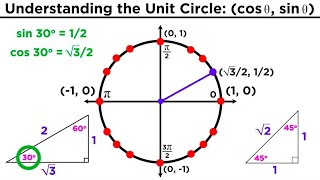
When teaching geometry to high school students, math teachers often turn to blank unit circles for a simple, intuitive way to visualize trigonometric functions. But like any pedagogical tool, the blank unit circle requires skill and strategy to use effectively – and misuse can cause more harm than good. In this article, we'll explore the crucial mistakes to avoid when using a blank unit circle. The blank unit circle is a fundamental concept in trigonometry, representing a circle with a radius of 1 unit centered at the origin of a coordinate plane. To use it productively, students (and teachers!) must understand the relationship between angles, radians, and coordinates on the unit circle. For instance, consider the angle of 30 degrees (π/6 radians) – as you move counterclockwise around the circle, you'll encounter points with coordinates (cos θ, sin θ) like (sqrt(3)/2, 1/2).
That wraps up our extensive overview of Crucial Mistakes To Avoid When Using A Blank Unit Circle.
Frequently Asked Questions about Crucial Mistakes To Avoid When Using A Blank Unit Circle
Q: What is the most accurate information about Crucial Mistakes To Avoid When Using A Blank Unit Circle?
A: Our platform aggregates the most comprehensive and up-to-date insights, ensuring you get relevant details about Crucial Mistakes To Avoid When Using A Blank Unit Circle.
Q: Why is Crucial Mistakes To Avoid When Using A Blank Unit Circle trending right now?
A: Interest in Crucial Mistakes To Avoid When Using A Blank Unit Circle has surged recently as more people seek reliable resources, related media, and detailed analysis.
Q: Where can I find related media and updates for Crucial Mistakes To Avoid When Using A Blank Unit Circle?
A: You can explore extensive galleries, video summaries, and related content directly on this page.