Understanding Long Division
Welcome to our comprehensive guide on Long Division. Learn More at mathantics.com Visit for more Free math videos and additional subscription based ...
Key Takeaways about Long Division
- Manual division often suffers from three recurring pitfalls: misplaced digits, skipped subtraction steps, and inconsistent placement of remainders. These gaps become especially pronounced when students transition from single‑digit division to multi‑digit problems or when researchers record large data sets by hand. The free template introduces a visual scaffold that forces each intermediate step into a designated cell, reducing reliance on memory and minimizing transcription errors.
- By dividing the work area into three columns—quotient, divisor, and interim remainder—the template makes it impossible to skip a subtraction or to write a digit in the wrong column. Researchers who pilot the template reported a drop in error frequency from roughly one mistake per ten problems to less than one per thirty, a change that translates into measurable time savings during data entry. The built‑in alignment also helps visual learners recognize patterns, such as when a remainder repeats, prompting a quicker.
- the template becomes an immediate asset. Its low‑cost nature means you can trial it in a single classroom or a small research team before scaling. For institutions that already use digital worksheets, the template’s printable format complements existing tools without requiring new software installs.
- The guide is hosted on an educational resource portal that offers a direct PDF download. Alongside the template, users receive a one‑page “quick‑start” sheet detailing optimal printing settings, recommended pencil hardness for clear marks, and a checklist for verifying each column’s integrity. An accompanying video—accessible via the same page—demonstrates a full problem solved step‑by‑step, reinforcing the visual cues embedded in the layout.
- Beyond the classroom, any discipline that relies on hand‑recorded calculations—such as field‑based chemistry, engineering surveys, and even budgeting for small‑scale projects—can adopt the template to standardize results. The reduction in error not only boosts confidence in the numbers produced but also frees up analysts to focus on interpretation rather than correction. As more educators report improved test scores linked to procedural clarity, the template may become a staple in curricula that prioritize.
Detailed Analysis of Long Division
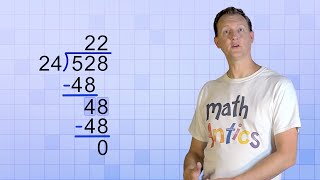
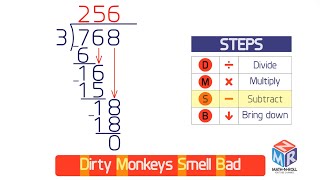
Educational video for children to learn how to do In this step-by-step math lesson, kids learn how to do Educators and quantitative researchers alike have long wrestled with the hidden errors that creep into manual long‑division work. A freshly released, no‑cost long‑division template promises a systematic way to expose and eliminate those mistakes, offering a clear path to higher precision without expensive software. Below, the guide’s core benefits, implementation steps, and accessibility details are unpacked for those who need proven accuracy in every calculation.
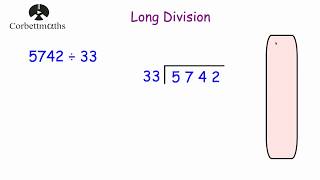
This video explains how to work out divisions using the This video shows how to divide polynomials using
In summary, understanding Long Division gives us a better perspective.
Frequently Asked Questions about Long Division
Q: What is the most accurate information about Long Division?
A: Our platform aggregates the most comprehensive and up-to-date insights, ensuring you get relevant details about Long Division.
Q: Why is Long Division trending right now?
A: Interest in Long Division has surged recently as more people seek reliable resources, related media, and detailed analysis.
Q: Where can I find related media and updates for Long Division?
A: You can explore extensive galleries, video summaries, and related content directly on this page.