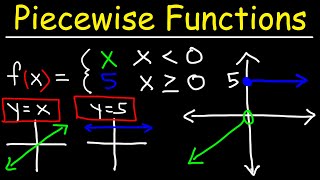
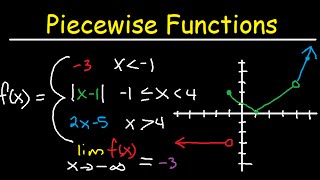
Introduction to Piecewise Functions
Exploring Piecewise Functions reveals several interesting facts. This precalculus video tutorial provides a basic introduction on graphing
Piecewise Functions Comprehensive Overview
This precalculus video tutorial provides a basic introduction on evaluating Support: Cool Mathy Merch: How to graph ... For students and professionals alike, mastering piecewise functions is a crucial aspect of mathematical proficiency. The domain and range of these functions are essential concepts to understand, as they define the input and output values of the function. A Domain and Range of Piecewise Functions Cheat Sheet and Practice Exercises can be a valuable resource for those looking to improve their skills in this area. With a solid grasp of piecewise functions, individuals can tackle complex mathematical problems with.
This math video tutorial focuses on graphing Ms. Smith's Math Tutorials You Try Answer: 1) 9 2) 11 *If graphing, make sure your graph is 15 units in each direction to get the ...
Summary & Highlights for Piecewise Functions
- Piecewise functions are defined by multiple sub-functions, each applied to a specific interval of the domain. These intervals are typically separated by boundary points, where the function's behavior changes. To work with piecewise functions effectively, it's essential to identify the domain and range of each sub-function and understand how they interact. By doing so, users can analyze and solve problems involving piecewise functions with greater ease.
- The domain of a piecewise function refers to the set of all possible input values, while the range represents the set of all possible output values. To determine the domain and range, users must examine each sub-function and consider any restrictions on the input values. This process involves identifying the boundary points, testing intervals, and analyzing the behavior of the function within each interval. A cheat sheet and practice exercises can help reinforce these concepts and provide a quick reference guide.
- Piecewise functions have numerous applications in fields such as physics, engineering, and economics. For instance, they can be used to model real-world phenomena like the motion of objects, population growth, and financial transactions. By understanding the domain and range of piecewise functions, professionals can create more accurate models, make informed decisions, and optimize systems. Furthermore, the ability to analyze and solve piecewise functions can also help individuals develop problem-solving skills.
- To become proficient in working with piecewise functions, it's essential to practice regularly and reinforce key concepts. A Domain and Range of Piecewise Functions Cheat Sheet and Practice Exercises can be a valuable resource for this purpose. Additionally, users can benefit from working with real-world examples, collaborating with peers, and seeking guidance from experienced instructors. By combining these approaches, individuals can develop a deep understanding of piecewise functions and apply their knowledge to.
- In this video, I explained the steps involved in graphing a
Stay tuned for more updates related to Piecewise Functions.
Frequently Asked Questions about Piecewise Functions
Q: What is the most accurate information about Piecewise Functions?
A: Our platform aggregates the most comprehensive and up-to-date insights, ensuring you get relevant details about Piecewise Functions.
Q: Why is Piecewise Functions trending right now?
A: Interest in Piecewise Functions has surged recently as more people seek reliable resources, related media, and detailed analysis.
Q: Where can I find related media and updates for Piecewise Functions?
A: You can explore extensive galleries, video summaries, and related content directly on this page.