Understanding Mistakes To Avoid When Submitting Irs Form 843
Let's dive into the details surrounding Mistakes To Avoid When Submitting Irs Form 843. Even a well‑written explanation won’t win the IRS if you don’t back it up. Attach receipts, audit reports, or correspondence that prove your claim is legitimate. For example, if you’re contesting a penalty for late payment, include the original notice and evidence of payment. The IRS often requests documentation, and a complete packet reduces back‑and‑forth.
Key Takeaways about Mistakes To Avoid When Submitting Irs Form 843
- Form 843 is the IRS’s official avenue for requesting a refund of taxes or a credit for a penalty, interest, or an overpayment. Unlike the typical 1040, it’s a stand‑alone document that demands accuracy and completeness. Because the IRS scrutinises each claim, even a small oversight can trigger a delay or rejection.
- One of the first places the IRS stops is the taxpayer’s name and taxpayer identification number (TIN). A wrong SSN, an old number, or a typo can cause the entire form to be tossed back. Always double‑check that the TIN matches what’s on file for your tax year, and consider using a print‑ready PDF to avoid manual entry errors.
- Form 843 requires you to state the tax year or period to which the claim applies. A common mistake is selecting the wrong “tax year” or “tax period” code for a refund that actually stems from a prior year’s overpayment. Mislabeling the period can lead the IRS to process the claim against the wrong tax return, resulting in a partial refund or a mismatch in your records.
Detailed Analysis of Mistakes To Avoid When Submitting Irs Form 843
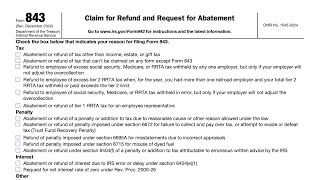
Each Form 843 includes a list of codes that specify why you’re claiming a refund. Selecting the wrong code—such as using code “3” for an overpayment instead of code “2” for a tax deficiency—can trigger a denial because the IRS will process the request under the wrong assumption. Read the code list carefully and match your situation exactly. How to request Penalty relief by administrative waiver from the Internal Revenue Service. Taxpayer is requesting a first-time ... When a tax bill leaves a paper trail of errors, the IRS will gladly chase you down for a refund. But filing Form 843—Claim for Refund or Credit—can be a minefield if you’re not careful. Even a single misplaced signature or a typo in a dollar amount can push your claim into a pending status or, worse, a denial. Below are the most common pitfalls and how to sidestep them, so you can get the money you’re owed without a second‑round audit.
That wraps up our extensive overview of Mistakes To Avoid When Submitting Irs Form 843.
Frequently Asked Questions about Mistakes To Avoid When Submitting Irs Form 843
Q: What is the most accurate information about Mistakes To Avoid When Submitting Irs Form 843?
A: Our platform aggregates the most comprehensive and up-to-date insights, ensuring you get relevant details about Mistakes To Avoid When Submitting Irs Form 843.
Q: Why is Mistakes To Avoid When Submitting Irs Form 843 trending right now?
A: Interest in Mistakes To Avoid When Submitting Irs Form 843 has surged recently as more people seek reliable resources, related media, and detailed analysis.
Q: Where can I find related media and updates for Mistakes To Avoid When Submitting Irs Form 843?
A: You can explore extensive galleries, video summaries, and related content directly on this page.