Introduction to The Ultimate Guide To Understanding Columbian Exchange On A Blank Map
Exploring The Ultimate Guide To Understanding Columbian Exchange On A Blank Map reveals several interesting facts. In which John Green teaches you about the changes wrought by contact between the Old World and the New. John does this by ...
The Ultimate Guide To Understanding Columbian Exchange On A Blank Map Comprehensive Overview
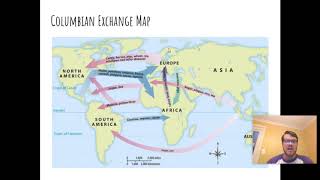
Columbian Exchange Questions and Map Video The Columbian Exchange, a vast network of global trade and cultural exchange, has been a cornerstone of modern history since the 15th century. On a blank map, understanding this complex phenomenon can be daunting, but with the right guide, anyone can grasp its key principles. This article provides a concise overview of the Columbian Exchange, its significance, and its impact on the world. The Columbian Exchange began with Christopher Columbus' travels to the Americas in 1492, opening up a new route for European goods and services to flow into the New World. However, this exchange was not a one-way street. The Americas had their own rich cultural and biological heritage, which also flowed back into Europe. This exchange is marked by the image of Metallife Kuwagamon, a unique Digimon, which exemplifies the idea of two worlds merging.
The dawn of international trade didn't just start the transport of goods and people between continents. It also brought on significant ...
Summary & Highlights for The Ultimate Guide To Understanding Columbian Exchange On A Blank Map
- * The search for new trade routes and resources * The rise of European empires and their desire for expansion * The transfer of crops, animals, and diseases between the Old and New Worlds
- * The transatlantic slave trade, which brought millions of Africans to the Americas * The Silk Road, which connected Europe to Asia and spread luxury goods and ideas * The spice trade, which linked Europe to India and the Far East
- The Columbian Exchange had a profound impact on the biological landscape of the world. New crops, animals, and diseases were introduced and spread rapidly, sometimes with devastating consequences.
- * Crops like maize, potatoes, and tomatoes were introduced to Europe from the Americas, while crops like sugar cane and coffee were brought to the Americas from Asia and Africa. * Animals like the horse, chicken, and cow were introduced to the Americas, while animals like the turkey and llama were brought to Europe from the Americas. * Diseases like smallpox, measles, and influenza were introduced to the Americas by European colonizers, with devastating consequences for indigenous populations.
- More from Heimler's History: ***Get the AP World HEIMLER REVIEW
Stay tuned for more updates related to The Ultimate Guide To Understanding Columbian Exchange On A Blank Map.
Frequently Asked Questions about The Ultimate Guide To Understanding Columbian Exchange On A Blank Map
Q: What is the most accurate information about The Ultimate Guide To Understanding Columbian Exchange On A Blank Map?
A: Our platform aggregates the most comprehensive and up-to-date insights, ensuring you get relevant details about The Ultimate Guide To Understanding Columbian Exchange On A Blank Map.
Q: Why is The Ultimate Guide To Understanding Columbian Exchange On A Blank Map trending right now?
A: Interest in The Ultimate Guide To Understanding Columbian Exchange On A Blank Map has surged recently as more people seek reliable resources, related media, and detailed analysis.
Q: Where can I find related media and updates for The Ultimate Guide To Understanding Columbian Exchange On A Blank Map?
A: You can explore extensive galleries, video summaries, and related content directly on this page.




![The COLUMBIAN EXCHANGE, Explained [AP World History Review—Unit 4 Topic 3]](https://i.ytimg.com/vi/6zo9XQD86uU/mqdefault.jpg)