Exploring The Science Behind Creating Addictive Seattle Crossword Puzzles
Welcome to our comprehensive guide on The Science Behind Creating Addictive Seattle Crossword Puzzles.
- Semantic clustering: Grouping related clues (e.g., all “Rainy Day” themed entries) harnesses the brain’s tendency to form associative networks, lowering the cognitive load required for each individual answer.
- These tactics are not random; they mirror findings from neurobiology that show intermittent, unexpected rewards produce stronger memory consolidation than predictable outcomes. In practice, a solver may finish a 15‑minute puzzle feeling both mentally stimulated and satisfied, ready to start another.
- What do you do to relax after a hard day at work — trash TV? Hit the gym? Maybe fiddle around with a
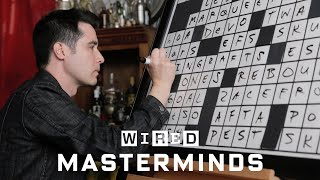
- David Kwong's performance draws on his talents as a magician and as a
- Decades after her father introduced her to the weekly ritual of The New York Times Sunday
In-Depth Information on The Science Behind Creating Addictive Seattle Crossword Puzzles
Seattle’s daily crossword, a staple of local coffee shops and commuter commutes, isn’t just a pastime—it’s a carefully engineered experience that taps into memory, reward pathways, and the city’s cultural rhythm. By blending linguistic cues, pattern‑recognition tricks, and subtle dopamine spikes, puzzle makers craft an activity that keeps residents turning pages, even on rainy mornings. Unlike generic syndicated grids, Seattle’s puzzles often incorporate regional references—think Pike Place market stalls, the Space Needle silhouette, or a nod to the city’s tech startups. This local flavor activates the brain’s hippocampus, the area responsible for contextual memory, making each clue feel personally relevant. When a solver recognizes a familiar landmark, the associated sense of pride releases a modest amount of dopamine, reinforcing the desire to continue. Pattern priming: Early clues use common word structures (e.g., “____‑go” for “taco‑go”) to warm up the solver’s lexical pathways, easing the transition into more challenging entries. Variable reward timing: By spacing “aha!” moments—such as a clever pun or a surprisingly short answer—designers mimic the intermittent reinforcement pattern seen in video‑game loops, which sustains engagement longer than steady difficulty.
In summary, understanding The Science Behind Creating Addictive Seattle Crossword Puzzles gives us a better perspective.
Frequently Asked Questions about The Science Behind Creating Addictive Seattle Crossword Puzzles
Q: What is the most accurate information about The Science Behind Creating Addictive Seattle Crossword Puzzles?
A: Our platform aggregates the most comprehensive and up-to-date insights, ensuring you get relevant details about The Science Behind Creating Addictive Seattle Crossword Puzzles.
Q: Why is The Science Behind Creating Addictive Seattle Crossword Puzzles trending right now?
A: Interest in The Science Behind Creating Addictive Seattle Crossword Puzzles has surged recently as more people seek reliable resources, related media, and detailed analysis.
Q: Where can I find related media and updates for The Science Behind Creating Addictive Seattle Crossword Puzzles?
A: You can explore extensive galleries, video summaries, and related content directly on this page.