Exploring Irs Form 843 Purpose And Eligibility Criteria Explained
If you are looking for information about Irs Form 843 Purpose And Eligibility Criteria Explained, you have come to the right place.
- Filing IRS Form 843 can have significant benefits for taxpayers. By successfully claiming a refund or abatement, individuals and businesses can recover substantial amounts of money that would otherwise be lost. Moreover, resolving tax disputes through this form can help avoid further penalties, interest, and even legal action. It is a proactive step towards managing tax liabilities and ensuring compliance with IRS regulations. For those facing financial difficulties due to tax issues, filing Form 843 can provide.
- In conclusion, IRS Form 843 is a vital tool for taxpayers seeking to address tax-related issues and recover overpaid amounts. By understanding the purpose and eligibility criteria of this form, individuals and businesses can navigate the tax dispute resolution process more effectively. It is crucial to approach the filing of IRS Form 843 with careful preparation and attention to detail to ensure the best possible outcomes. For those dealing with tax complexities, consulting with a tax professional or seeking.
In-Depth Information on Irs Form 843 Purpose And Eligibility Criteria Explained
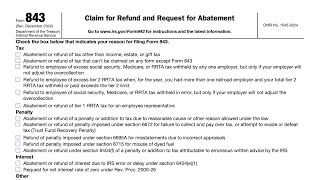
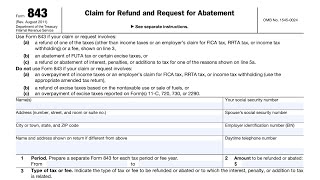
How to request Penalty relief by administrative waiver from the For individuals and businesses dealing with tax-related issues, navigating the complexities of the Internal Revenue Service (IRS) can be daunting. One crucial form that plays a significant role in resolving tax disputes is IRS Form 843, Claim for Refund and Request for Abatement. This form is used to claim a refund or request an abatement of certain taxes, interest, or penalties. In this article, we will delve into the purpose and eligibility criteria of IRS Form 843, providing clarity on its usage and benefits. IRS Form 843 serves as a formal request to the IRS to reconsider or adjust tax liabilities. It is commonly used in situations where a taxpayer believes they have overpaid their taxes or have been wrongly assessed penalties and interest. The form allows taxpayers to provide detailed explanations and supporting documentation for their claims, which are then reviewed by the IRS. By filing Form 843, individuals and businesses can potentially recover overpaid amounts or have unjustified penalties and interest waived. To be eligible to file IRS Form 843, taxpayers must meet specific criteria. These include having a legitimate claim for a refund or abatement, such as overpayment of taxes, erroneous assessment of penalties, or incorrect computation of interest. Additionally, the claim must be for a specific tax year or period, and the taxpayer must provide all required documentation and explanations to support their claim. It is essential to carefully review the form's instructions and ensure all necessary information is included.
We hope this detailed breakdown of Irs Form 843 Purpose And Eligibility Criteria Explained was helpful.
Frequently Asked Questions about Irs Form 843 Purpose And Eligibility Criteria Explained
Q: What is the most accurate information about Irs Form 843 Purpose And Eligibility Criteria Explained?
A: Our platform aggregates the most comprehensive and up-to-date insights, ensuring you get relevant details about Irs Form 843 Purpose And Eligibility Criteria Explained.
Q: Why is Irs Form 843 Purpose And Eligibility Criteria Explained trending right now?
A: Interest in Irs Form 843 Purpose And Eligibility Criteria Explained has surged recently as more people seek reliable resources, related media, and detailed analysis.
Q: Where can I find related media and updates for Irs Form 843 Purpose And Eligibility Criteria Explained?
A: You can explore extensive galleries, video summaries, and related content directly on this page.