Introduction to Banana Ball Python Pattern
Welcome to our comprehensive guide on Banana Ball Python Pattern. For those prioritizing value, the banana ball python offers several practical advantages. Its popularity ensures a wide availability, often making it more accessible than rarer designer morphs. Genetically, pairing a banana with other morphs can produce an array of beautiful offspring, making it a versatile project snake. Furthermore, its typically calm temperament, common in ball pythons, means you get a spectacular pet that is also likely to be a handleable companion.
Banana Ball Python Pattern Comprehensive Overview
Caring for a banana ball python follows the standard, well-established protocol for the species. The key is to provide a secure enclosure with proper temperature gradients (88-92°F on the warm side, 75-80°F on the cool side) and a humidity level around 50-60%, increasing to 70% during shed. Their feeding response is generally reliable, accepting appropriately sized rodents. It's a practical note that the banana's bright color can make checking for proper shedding and overall skin condition easier than on darker. The co-dominant nature of the banana gene has significant implications. A "super banana" (homozygous) exists, but it often presents with a reduced pattern and can be less visually dynamic than the heterozygous form. Breeders value the banana for its ability to influence other morphs, creating designer combinations like the "Banager" (Banana +ager) or "Monsoon" (Banana +fire). This genetic flexibility is a major factor in its enduring appeal and market stability. There are an infinite number of patterns that
At its core, a banana ball python is a co-dominant morph. The most telling feature is its coloration, which typically presents as a bright, creamy yellow to orange base with brown or black freckle-like spots that often develop with age. The pattern itself is usually reduced, meaning the classic ball python "alien heads" are replaced by a more uniform, speckled look. This creates a high-contrast animal that is immediately recognizable. Understanding the banana pattern requires a quick comparison. Compared to a standard wild-type ball python, the banana is dramatically lighter and more colorful. When placed next to a "pastel" morph, which also enhances color, the banana's yellow is more intense and often leans towards orange. A key differentiator is the freckling; while a pastel might have clean patterns, a mature banana will show those characteristic dark spots, a feature many owners find endearing.
Summary & Highlights for Banana Ball Python Pattern
- we discuss combos, and the infamous journey of
- MUSCLE SERPENTS DAILY: FRIDAY October 29 2021 GENES that influence how
- Are you struggling to figure out what morph your
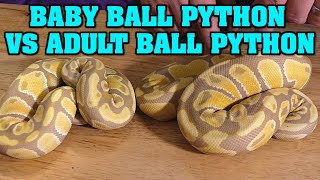
- Want to see how that cute little baby you buy will look in a few years? Let's compare some morphs and combos! Help Support ...
- The banana ball python pattern has become a standout favorite in the reptile community, known for its vibrant yellow hues and unique speckled appearance. This morph is a cornerstone for many collectors, offering a visually striking snake that remains docile and manageable for enthusiasts at various experience levels.
In summary, understanding Banana Ball Python Pattern gives us a better perspective.
Frequently Asked Questions about Banana Ball Python Pattern
Q: What is the most accurate information about Banana Ball Python Pattern?
A: Our platform aggregates the most comprehensive and up-to-date insights, ensuring you get relevant details about Banana Ball Python Pattern.
Q: Why is Banana Ball Python Pattern trending right now?
A: Interest in Banana Ball Python Pattern has surged recently as more people seek reliable resources, related media, and detailed analysis.
Q: Where can I find related media and updates for Banana Ball Python Pattern?
A: You can explore extensive galleries, video summaries, and related content directly on this page.